Solar Site Preparation: Why Groundwork Matters
- Mar 3
- 2 min read
Solar energy has become a key part of modern power infrastructure for residential, agricultural, and commercial applications. The success of any solar project depends on more than just the panels. Proper site preparation is a foundational requirement for system performance, constructability, and long‑term reliability.




The Value of Solar Energy
Solar power offers several long‑term advantages when compared to traditional energy sources:
Predictable energy costs by reducing dependence on utility rate fluctuations
Low operating and maintenance requirements once systems are installed
Scalable system design, from small ground‑mounted arrays to large installations
Environmental benefits, including reduced emissions and land‑use efficiency
Why Site Conditions Matter in Solar Construction
Solar installations rely on precise alignment, stable foundations, and consistent access across the site. Poor ground conditions can introduce challenges such as uneven racking, foundation settlement, drainage issues, and installation delays.
Effective site preparation addresses:
Surface and subsurface stability
Drainage and water management
Access for construction and maintenance equipment
Long‑term protection of foundations and electrical infrastructure
Solar Site Preparation
Land Clearing and Layout
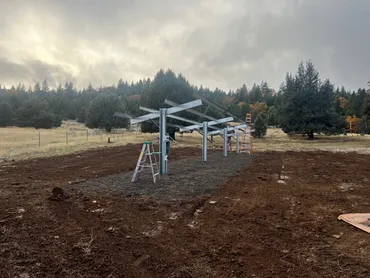
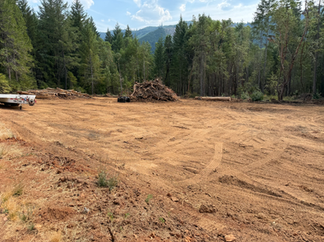
Clearing vegetation and surface obstructions creates the physical space required for accurate system layout. This step supports proper row spacing, equipment movement, and adherence to site plans while reducing interference during construction.
Grading and Elevation Control
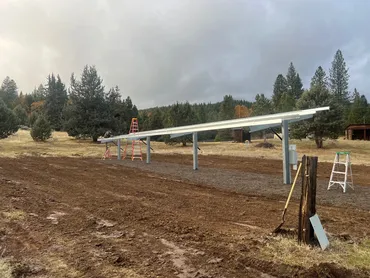
Solar racking systems depend on consistent slopes and elevations. Grading ensures that terrain meets design tolerances, supports proper panel orientation, and reduces mechanical adjustments during installation.
Soil Preparation and Compaction
Prepared and compacted soils help support foundation systems such as driven piles, ground screws, or ballasted structures. Stable soils reduce the risk of movement, misalignment, and long‑term structural stress.
Drainage and Erosion Management
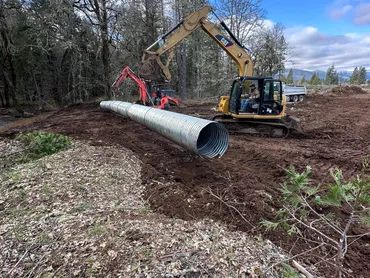
Water movement can significantly affect solar infrastructure. Integrated drainage solutions help manage runoff, prevent erosion, and protect foundations and cabling throughout the life of the system.
Trenching and Subsurface Coordination
Many projects require trenching for electrical conduit, grounding systems, or related infrastructure. Accurate trenching aligned with system layout improves installation efficiency and helps protect critical components.
Building Solar Systems for the Long Term
Careful planning, professional site preparation, and close attention to ground conditions are critical to ensuring solar systems perform reliably for decades. Consider Blackhawk Excavation for your next solar project so that it starts on a stable, construction‑ready foundation. Properly prepared ground supports efficient installation, protects structural and electrical components, and contributes to long‑term system performance and value.

Comments